 Call Us:- 08045803828

 Send Inquiry
 English
 Spanish
 French
 German
 Italian
 Chinese (Simplified)
 Japanese
 Korean
 Arabic
 Portuguese
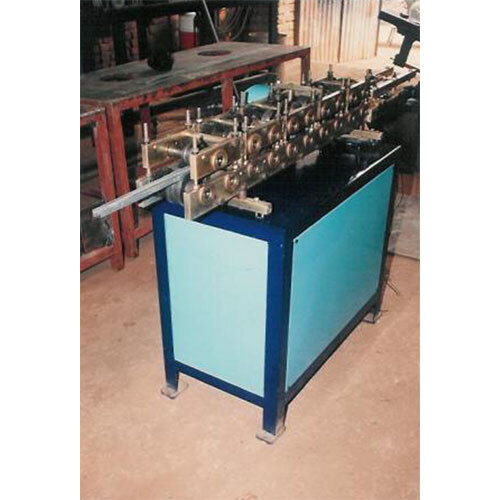
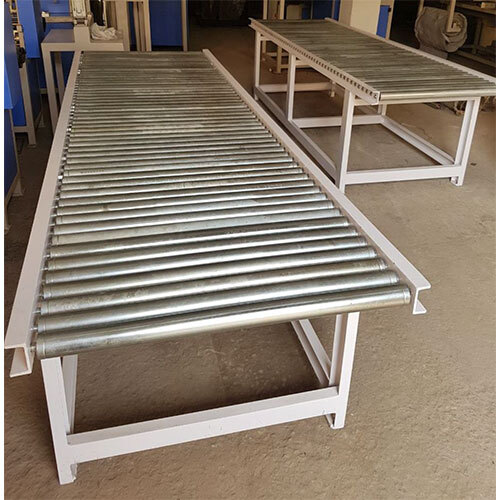
ROLLER FORMER MACHINE
Product Details:
- Voltage 220 Volt (v)
- Machine Type ROLLER FORMER MACHINE
- Control System Semi-Automatic
- Frequency 50 Hertz (HZ)
- Power Source Electricity
- Operating Type Automatic
- Surface Treatment Painted
- Click to View more
X
ROLLER FORMER MACHINE Price And Quantity
- 1 Piece
ROLLER FORMER MACHINE Product Specifications
- 50 Hertz (HZ)
- Automatic
- Semi-Automatic
- 1 Year
- ROLLER FORMER MACHINE
- Industrial
- Electricity
- 220 Volt (v)
- Painted
Product Description
A Roller Former Machine (also known as a Roll Forming Machine) is a piece of machinery used in the manufacturing process of shaping and forming metal into specific profiles or shapes through a series of rollers. This machine is primarily used for producing metal components with constant cross-sectional profiles that are typically used in industries such as construction, automotive, and appliance manufacturing.
How a Roller Former Machine Works:
-
Material Feeding:
- The process begins with feeding a flat sheet or coil of metal (usually steel, aluminum, or other metals) into the roller former machine. The material is unwound from a coil, and its fed into the system at a precise speed.
-
Roller Stations:
- The machine consists of multiple roller stations (or sets of rollers) arranged in a series. Each roller station gradually shapes the material by bending or curving it at a specific angle.
- As the metal passes through the rollers, it is progressively formed into the desired shape, such as a channel, angle, or other cross-sectional profiles.
-
Forming Process:
- The rollers progressively form the material without cutting it. This process helps produce continuous lengths of metal profiles with consistent dimensions.
-
Final Shaping:
- The final rollers shape the metal to its final form, after which it exits the roller former as a fully formed piece, often cut to a specified length.
-
Cutting to Length:
- After the material is formed, some roller former machines include a cutting station where the formed metal is cut to specific lengths, usually with a shearing blade or flying saw.
Features of a Roller Former Machine:
-
Multiple Rollers: The rollers gradually shape the material by applying force at multiple stages, which ensures that the metal doesnt undergo too much stress or strain in one step.
-
Adjustable Rollers: The rollers can be adjusted to create different profiles, widths, and shapes. This makes the machine flexible and versatile for various applications.
-
High-Speed Production: Roller former machines operate at high speeds, allowing for mass production of long metal sections in continuous lengths.
-
Automated Control Systems: Modern roller formers are equipped with sophisticated control systems for automatic speed adjustment, material feeding, and cutting to ensure precision.
Types of Profiles Produced by Roller Forming Machines:
Roller forming machines are used to produce a wide range of profiles, including:
-
C-Sections:
- Often used in construction and roofing, C-sections are shaped like the letter "C" and are used in structural applications.
-
U-Sections:
- These are U-shaped profiles commonly used in framing and construction.
-
Z-Sections:
- Z-profiles are used for building structures, often as purlins in steel building frames.
-
I-Beams and Channels:
- I-shaped beams and U-shaped channels are often produced for structural applications, where strength and durability are important.
-
Corrugated Sheets:
- Corrugated profiles, typically used for roofing and cladding, can be produced through a roller former machine by passing metal sheets through specialized rollers that create wave-like patterns.
-
Ridge Caps:
- Used in roofing, ridge caps are formed to fit along the peak of a roof.
-
Trim and Flashing Profiles:
- Roller forming machines are also used to create trim and flashing used in construction, ensuring weather resistance and aesthetic appeal.
Applications of Roller Former Machines:
-
Construction Industry:
- Used to manufacture roofing panels, wall panels, and structural components such as beams and purlins.
- Common materials used include galvanized steel, aluminum, and stainless steel.
-
Automotive Industry:
- Automotive parts such as door panels, roof rails, or reinforcements can be made using roller forming machines.
-
Appliance Manufacturing:
- Appliance manufacturers use roller forming to create parts for products like refrigerators, washing machines, and ovens, which often require precise metal shaping.
-
Furniture Industry:
- In the furniture sector, roller forming machines are used to create metal profiles for frames, legs, or other structural components.
-
Solar Panel Frames:
- Solar panel manufacturers use roller forming to create frames that hold solar panels in place.
-
Agricultural Machinery:
- Parts like chassis frames or metal covers for farming equipment are often produced through roller forming.
Advantages of Roller Forming Machines:
-
High-Speed Production:
- Roller forming allows for continuous, high-speed production of long metal profiles, making it highly efficient for mass production.
-
Precision and Consistency:
- The process produces very consistent and precise profiles, which is critical in industries where uniformity is essential.
-
Cost-Effective:
- The continuous process reduces material waste and lowers production costs, especially for long runs.
-
Flexibility in Design:
- The machine can produce a wide variety of shapes and sizes, making it versatile and adaptable to different needs.
-
No Need for Cutting or Welding:
- Since the material is shaped rather than cut or welded, roller forming preserves the integrity of the material and reduces the risk of defects like cracks or deformations.
Maintenance and Considerations:
-
Roller Adjustment: Regular maintenance and adjustment of rollers are necessary to maintain the quality of the profile being produced and to prevent wear.
-
Lubrication: Proper lubrication is crucial to reduce friction between rollers and the material to prevent damage and ensure smooth operation.
-
Tooling Changes: Depending on the profile to be produced, tooling (such as roller designs) may need to be changed. This requires expertise and knowledge of how to make the necessary adjustments.
-
Material Compatibility: The machine is typically designed for specific materials (like steel or aluminum), so its important to choose the right type of material for the machines capabilities.
Common Roller Forming Machine Brands/Manufacturers:
- Forming Machines from YX (China): Known for manufacturing a variety of roller forming machines used in the construction and automotive sectors.
- NASCORP Roller Forming: A manufacturer based in the United States, specializing in equipment for custom metal forming.
- Bielomatik: A German manufacturer known for advanced and automated roller forming machines.
- Boschert: A company that offers both standard and custom roller forming systems.
Seamless Manufacturing Efficiency
Experience consistent performance with the Roller Former Machine, engineered for automated operations in demanding industrial settings. The machine's user-friendly semi-automatic controls allow operators to manage forming processes with minimal manual input, reducing workforce needs and improving productivity.
Adapted for the Indian Market
This Roller Former Machine is specifically tailored for Indian industries, operating efficiently at 220 Volts and 50 Hertz. Available from reputable sources across the country, it ensures timely service and support, making it an essential addition to manufacturing units nationwide.
FAQ's of ROLLER FORMER MACHINE:
Q: How does the Roller Former Machine function in an industrial setting?
A: The Roller Former Machine automates the metal forming process, utilizing its semi-automatic control system to shape materials accurately with minimal operator intervention, which streamlines production and improves consistency.Q: What types of materials can this machine process, and for which industries is it suitable?
A: This machine is primarily designed to handle various metal sheets commonly used in industries such as automotive, construction, and manufacturing, offering versatility across industrial applications.Q: When can maintenance be performed on the Roller Former Machine?
A: Routine maintenance can typically be carried out during scheduled downtime or planned maintenance windows. With its 1-year warranty, users also benefit from support and servicing within the warranty period.Q: Where is the Roller Former Machine available in India?
A: The Roller Former Machine is accessible through a network of distributors, exporters, manufacturers, suppliers, and traders across India, ensuring widespread availability and after-sales support.Q: What is the operating process for this machine?
A: Once connected to a 220 Volt power source, the operator selects the required settings using the semi-automatic control system, loads the raw material, and initiates the forming cycle, allowing the machine to perform its tasks efficiently.Q: How does the painted surface treatment benefit the machine?
A: The painted surface treatment safeguards the machine against corrosion and wear, thereby enhancing its durability and ensuring it retains its professional appearance in demanding industrial environments.Q: What are the main benefits of choosing the Roller Former Machine for industrial applications?
A: Key advantages include automated efficiency, reliable performance, easy integration due to standard power requirements, and a robust build backed by a comprehensive warranty, making it a valuable investment for industrial operations.Tell us about your requirement

Price:
Quantity
Select Unit
- 50
- 100
- 200
- 250
- 500
- 1000+
Additional detail
Mobile number
Email

Other Products in 'GAS TURBINE FILTER MACHINERY' category

KANWAL ENTERPRISES PRIVATE LIMITED
GST : 06AALCK9729J1ZW
GST : 06AALCK9729J1ZW
Contact Details

- Khasra No 4348/67, Industrial Area, Gurugram,Gurugram - 122016, Haryana, India
- Phone :08045803828

- Mr. Tajinder Pal Singh (Director)
- Mobile :08045803828
- Mr. Harpreet Singh
- Mobile :08045803828
- tpsingh@kanwalenterprises.com
- Works 2 : Plot No. 311, Sector 37, Gurgaon - 122001, Haryana, India.
Video
 Send Inquiry
 Send SMS


KANWAL ENTERPRISES
All Rights Reserved.(Terms of Use)
Developed and Managed by Infocom Network Private Limited.
Developed and Managed by Infocom Network Private Limited.

