 Call Us:- 08045803828

 Send Inquiry
 English
 Spanish
 French
 German
 Italian
 Chinese (Simplified)
 Japanese
 Korean
 Arabic
 Portuguese
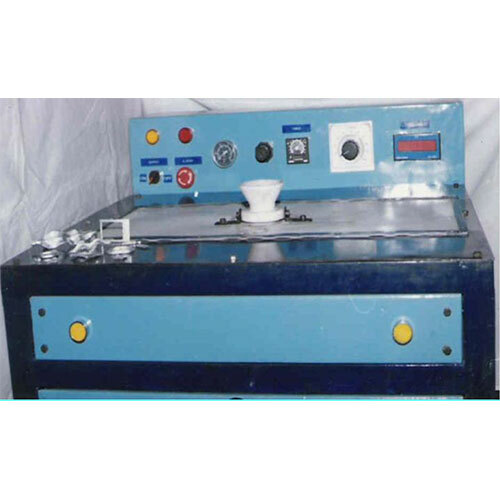
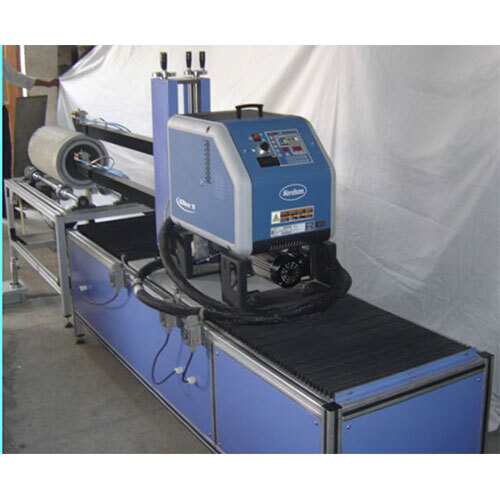
CENTRIFUGAL CASTING MACHINE
Product Details:
- Voltage 220 Volt (v)
- Control System Fully Automatic
- Power Source Electricity
- Operating Type Automatic
- Surface Treatment Painted
- Color Blue
- Warranty 1 Year
- Click to View more
X
CENTRIFUGAL CASTING MACHINE Price And Quantity
- 1 Piece
- 60 Hz
- Android
- 178
- Yes
- AAA
- Built-in WiFi, Screen Mirroring
- 2
CENTRIFUGAL CASTING MACHINE Product Specifications
- Blue
- 220 Volt (v)
- Painted
- Automatic
- Industrial
- Electricity
- Fully Automatic
- 1 Year
- 60 Hz
- Android
- 178
- Yes
- AAA
- Built-in WiFi, Screen Mirroring
- 2
Product Description
A centrifugal casting machine is a specialized piece of equipment used in the process of centrifugal casting, which involves pouring molten metal into a rotating mold to produce cylindrical or tubular components. This method is commonly used in industries that require parts with high-density, uniform structure, and minimal porosity, such as aerospace, automotive, and heavy machinery.
Key Features and Functionality:
-
Rotating Mold:
- The most distinctive feature of centrifugal casting is the rotating mold. The mold is spun at high speeds (typically between 300 to 3,000 RPM), which forces the molten metal to flow outward toward the mold's walls.
- The centrifugal force ensures that the denser elements of the metal are pushed toward the outer surface of the casting, while impurities and lighter elements tend to concentrate toward the inner portion.
-
Molten Metal:
- The molten metal (such as steel, cast iron, or bronze) is poured into the mold while it is spinning. As the metal solidifies, the centrifugal force causes it to settle in a uniform, dense structure.
- This method helps eliminate the formation of gas pockets and shrinkage defects, ensuring a higher quality of casting.
-
Casting Shape:
- Centrifugal casting is ideal for creating parts with cylindrical or hollow shapes, such as pipes, bushings, sleeves, and bearings. It is commonly used for parts that need high strength and wear resistance.
-
Mold Material:
- The molds used in centrifugal casting are typically made from materials like steel or cast iron. The inner surface of the mold may be treated to facilitate easy removal of the finished part after solidification.
Types of Centrifugal Casting Machines:
There are mainly two types of centrifugal casting machines:
-
Horizontal Centrifugal Casting Machine:
- In this setup, the mold rotates horizontally. The molten metal is poured into the mold, and centrifugal force helps shape the outer layers.
- This is often used for casting pipes, tubes, and other parts that require uniform thickness and high strength.
-
Vertical Centrifugal Casting Machine:
- The mold rotates vertically in this setup, typically used for creating smaller, cylindrical parts.
- It is particularly useful for casting products like bushings, sleeves, and bearing housings.
Advantages of Centrifugal Casting:
-
High-Quality Castings:
- The centrifugal force helps to eliminate air pockets, impurities, and defects like porosity, leading to stronger, more uniform castings.
-
Precise Control Over Wall Thickness:
- This process allows for better control over the thickness of the casting, especially in the outer layer, which is often more critical for wear resistance.
-
Reduced Material Waste:
- Since the process involves precise casting of cylindrical components, there is less scrap material compared to traditional casting methods.
-
Enhanced Mechanical Properties:
- The centrifugal force produces castings with improved mechanical properties, such as higher density and strength, due to the uniform structure.
-
Suitable for Mass Production:
- Centrifugal casting is well-suited for producing large quantities of similar parts efficiently.
Common Applications of Centrifugal Casting:
- Pipes and Tubes: The method is often used to create high-strength pipes used in industries like oil and gas.
- Bushings and Bearings: The process is ideal for making components that require high wear resistance.
- Automotive and Aerospace Parts: Parts like cylinder liners, engine components, and aircraft engine parts.
- Rotors and Cylinders: Used in heavy machinery and large equipment.
Process Steps in Centrifugal Casting:
-
Preparation of Mold:
- The mold is preheated to prevent thermal shock and ensure proper metal flow.
-
Molten Metal Pouring:
- The molten metal is poured into the rotating mold.
-
Centrifugal Solidification:
- The centrifugal force causes the molten metal to solidify, with the denser material forming the outer layers and lighter material solidifying inside.
-
Cooling and Extraction:
- After the metal has solidified and cooled sufficiently, the mold is removed, and the casting is extracted.
-
Finishing:
- Any finishing steps, such as machining or polishing, are done to achieve the desired final dimensions and surface quality
Efficient Automatic Casting Solution
Our centrifugal casting machine is tailored for versatility and efficiency in industrial applications. The fully automatic system simplifies the casting process, allowing operators to produce superior components with minimal supervision. Its robust build and state-of-the-art controls enhance precision, making it a valuable asset for foundries and manufacturing plants.
Modern Design and User Convenience
Painted in a vibrant blue for attractive aesthetics and corrosion resistance, this casting machine is also easy to maintain. The electric operation ensures consistent power delivery, and the automatic controls help streamline workflow, minimizing errors and downtime. Ideal for both small and large-scale operations, it suits diverse industrial needs.
FAQ's of CENTRIFUGAL CASTING MACHINE:
Q: How does the centrifugal casting machine operate automatically?
A: The centrifugal casting machine operates with a fully automatic control system, which manages the casting cycle from start to finish. Simply set the desired parameters, and the machine handles metal pouring, spinning, and cooling without manual intervention, ensuring consistent quality every time.Q: What are the main industrial uses of this centrifugal casting machine?
A: This machine is predominantly used in industries involving metal casting, such as foundries, manufacturing units, and production facilities. It is designed to efficiently produce pipes, cylinders, and other round components with high structural integrity.Q: When is the best time to use this machine in a production process?
A: The centrifugal casting machine is best used during the manufacturing stage where strong, cylindrical metal components are required. Its automatic operation facilitates integration into continuous production lines, making it suitable for both batch and mass-production scenarios.Q: Where can this centrifugal casting machine be installed?
A: This machine is suitable for installation in industrial environments such as factories, foundries, and workshops equipped with a reliable 220 Volt electrical supply. Its automatic system and robust design make it adaptable to new or existing production setups in India.Q: What surface treatment does the machine feature and what benefits does it provide?
A: The machine is finished with a painted surface treatment, providing protection against corrosion and wear. This not only enhances the machine's durability but also makes it easier to clean and maintain over its operational lifespan.Q: How does using this machine benefit industrial manufacturers and exporters?
A: By automating the casting process, manufacturers and exporters benefit from higher production speeds, improved product consistency, reduced labor costs, and enhanced workplace safety, ultimately boosting overall productivity and competitiveness.Tell us about your requirement

Price:
Quantity
Select Unit
- 50
- 100
- 200
- 250
- 500
- 1000+
Additional detail
Mobile number
Email

Other Products in 'GAS TURBINE FILTER MACHINERY' category

KANWAL ENTERPRISES PRIVATE LIMITED
GST : 06AALCK9729J1ZW
GST : 06AALCK9729J1ZW
Contact Details

- Khasra No 4348/67, Industrial Area, Gurugram,Gurugram - 122016, Haryana, India
- Phone :08045803828

- Mr. Tajinder Pal Singh (Director)
- Mobile :08045803828
- Mr. Harpreet Singh
- Mobile :08045803828
- tpsingh@kanwalenterprises.com
- Works 2 : Plot No. 311, Sector 37, Gurgaon - 122001, Haryana, India.
Video
 Send Inquiry
 Send SMS
 Call Me Free


KANWAL ENTERPRISES
All Rights Reserved.(Terms of Use)
Developed and Managed by Infocom Network Private Limited.
Developed and Managed by Infocom Network Private Limited.

