 Call Us:- 08045803828

 Send Inquiry
 English
 Spanish
 French
 German
 Italian
 Chinese (Simplified)
 Japanese
 Korean
 Arabic
 Portuguese
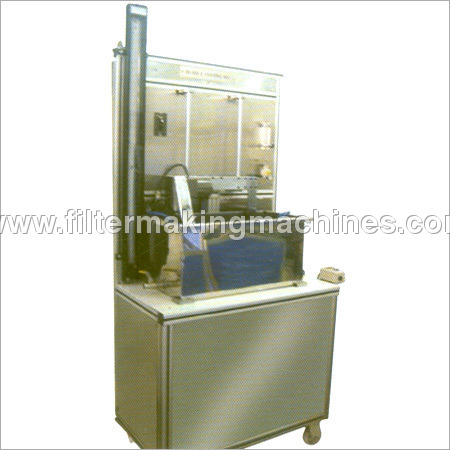
Bubble Test Equipment
Product Details:
X
Bubble Test Equipment Price And Quantity
- 2 Unit
- Yes
- Android
- AAA
- 178
- Built-in WiFi, Screen Mirroring
- 2
- 60 Hz
Bubble Test Equipment Trade Information
- 10 Unit Per Month
- 2-3 Months
Product Description
We are reckoned as an experienced manufacturer and exporter of Bubble Test Equipment. The special attributes of the Bubble Test Equipment include its aluminum extruded section frame, polycarbonate made tank dipping filter, necessary arrangement for its filter element, facility for easy rotation of the filter by motor for monitoring of bubble formation, digital flow meter and pneumatic operational mode to lower and raise the element clamping fixture into tank. As part of our ethical business dealing, we are offering this testing equipment at affordable price range.
Kanwal Enterprises is leading Manufacturer and Supplier of Bubble Testing Machine from Haryana, India. This machine ahs ability to check the bubble test leakage. It provides accurate measurement of bubble without keeping them in under water.
Application Areas:-
- Automotive
- Filtration
- Pharmaceuticals etc...
SPECIFICATIONS BUBBLE TEST EQUIPMENT
- Al. Extruded section frame
- Maximum dia. of the filter 150mm
- Maximum height of the filter 250mm
- Polycarbonate tank dipping filter into test oil
- Filter element clamping arrangement
- Arrangement to rotate the filter by motor to see first bubble formation
- Flow meter digital
- Pneumatic arrangement to lower & raise the element clamping fixture into tank
Precision Leak Detection for Industrial Needs
The Bubble Test Equipment offers reliable leak detection for various industrial components and assemblies. Designed with a sturdy build and advanced controls, it accommodates rigorous testing up to 6 bar, using air or compressed gas. The stainless steel test chamber ensures durability, while the digital display presents readings in real-time, supporting process efficiency and safety.
User-Friendly Operation with Advanced Controls
With an intuitive microprocessor-based control panel and digital/analogue recording system, this bench top device simplifies leak testing procedures. Operators benefit from accurate pressure regulation and clear data output, making the equipment suitable for both routine quality checks and detailed analysis. Its versatility in different power supplies also adds to its operational convenience.
FAQ's of Bubble Test Equipment:
Q: How is the Bubble Test Equipment used for leak detection?
A: The equipment is used by placing the test object inside the stainless steel test chamber, sealing it, and applying a test pressure of up to 6 bar using air or compressed gas. Leakage is identified by observing bubble formation, with results displayed digitally and recorded for analysis.Q: What are the key benefits of using this Bubble Test Equipment in industrial applications?
A: Key benefits include precise leak detection, easy operation via digital controls, reliable performance within a wide temperature range, and robust construction for long-lasting use. Its digital and analogue recording system also provides comprehensive data for quality assurance.Q: When should the Bubble Test Equipment be chosen over other leak detection methods?
A: This equipment is ideal when sensitive, visible leak detection is required, especially in component manufacturing, assembly lines, or after maintenance. It's particularly valuable when test pressures up to 6 bar and clear, digital results are essential for compliance and safety standards.Q: Where is this equipment typically installed and used?
A: The bench top design makes it suitable for installation in laboratory settings, factory testing areas, and industrial quality control departments. It is widely adopted in manufacturing, export, and supply operations across India.Q: What is the process for setting up and using the Bubble Test Equipment?
A: Start by connecting the equipment to the 230V AC, 50Hz power supply and setting the test medium (air or compressed gas). Place the test sample in the chamber, seal it, and use the microprocessor-based panel to select test parameters. Monitor the test via the digital display and record results as needed.Q: How does the digital display and control system improve usability?
A: The digital display provides instant, easy-to-read measurements of pressure and other parameters, reducing operator errors. The microprocessor-based control system ensures precise settings, consistent test cycles, and simplified operation for users of all experience levels.Tell us about your requirement

Price:
Quantity
Select Unit
- 50
- 100
- 200
- 250
- 500
- 1000+
Additional detail
Mobile number
Email

Other Products in 'Others' category


KANWAL ENTERPRISES PRIVATE LIMITED
GST : 06AALCK9729J1ZW
GST : 06AALCK9729J1ZW
Contact Details

- Khasra No 4348/67, Industrial Area, Gurugram,Gurugram - 122016, Haryana, India
- Phone :08045803828

- Mr. Tajinder Pal Singh (Director)
- Mobile :08045803828
- Mr. Harpreet Singh
- Mobile :08045803828
- tpsingh@kanwalenterprises.com
- Works 2 : Plot No. 311, Sector 37, Gurgaon - 122001, Haryana, India.
Video
 Send Inquiry
 Send SMS


KANWAL ENTERPRISES
All Rights Reserved.(Terms of Use)
Developed and Managed by Infocom Network Private Limited.
Developed and Managed by Infocom Network Private Limited.

